Why Garage Floor Coatings Fail Without Proper Cold-Climate Prep
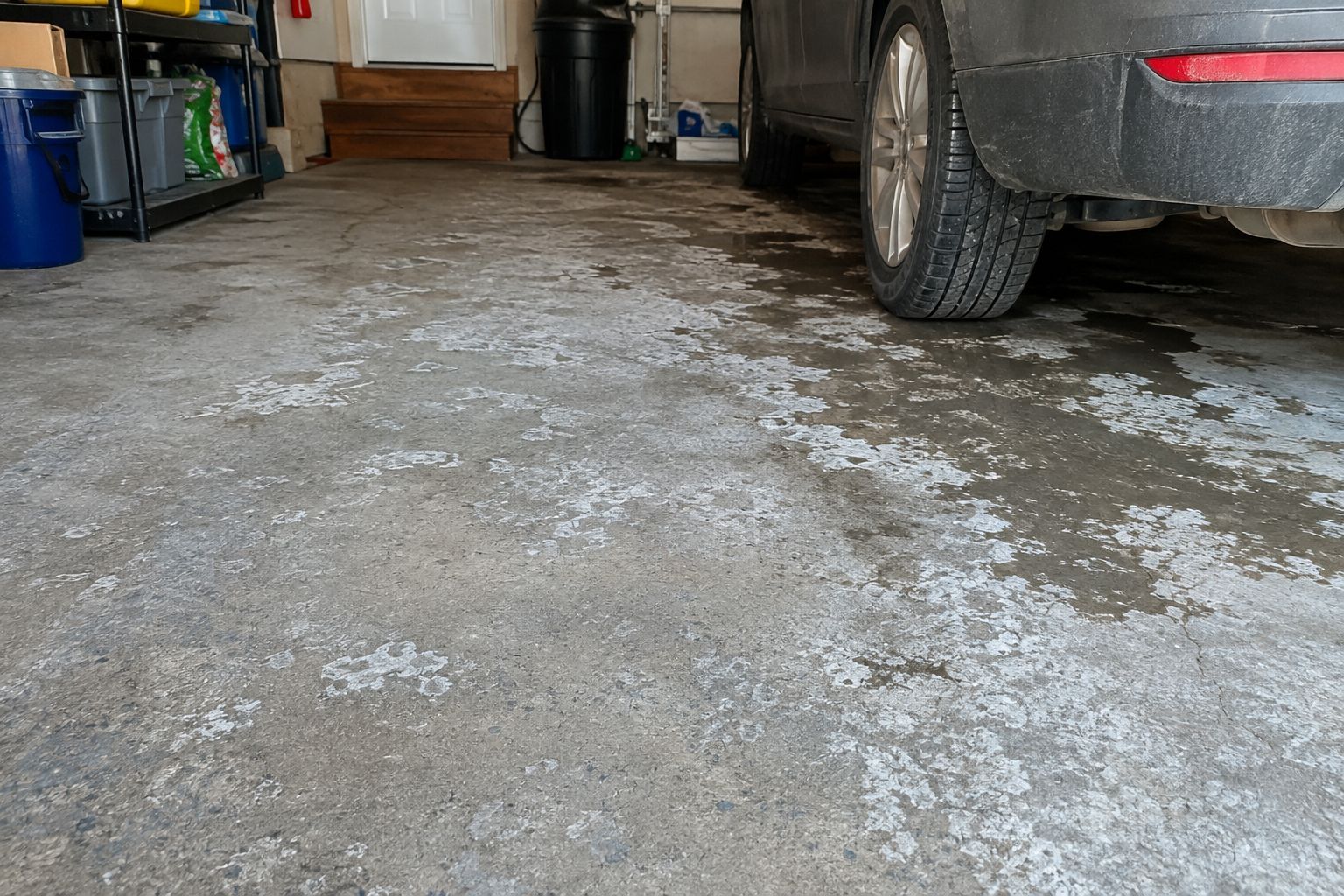
You paid for a coated garage floor that was supposed to shrug off tire marks, road salt, and dropped tools for years. Instead, a few months later you notice the finish lifting near the overhead door, a chalky haze in the corners, or sheets of coating that peel up when you drag a snow shovel across them. It looks like a bad product or a careless installer. Most of the time, the coating and the crew were not the problem. The problem started underneath, in a cold concrete slab that was never prepped and conditioned for the way coatings actually cure.
Cold-weather regions like Eastern Iowa punish shortcuts. A garage floor in Iowa City, Coralville, or Marion spends months near freezing, absorbs snowmelt and road salt off your tires, and swings through freeze-thaw cycles that untreated concrete handles poorly. When a coating goes down over a slab that is too cold, too wet, or too dirty, it can look perfect on day one and still fail by spring. This article walks through the real reasons cold-climate garage coatings peel, bubble, and delaminate, and what proper preparation actually looks like.
Quick Answer:
Garage floor coatings in cold climates fail mostly because of what happens at the concrete surface before and during curing, not the coating brand. A slab below roughly 50 degrees never lets the resin reach full cure, moisture rising through the concrete or condensing on top breaks the bond, and inadequate grinding leaves contaminants that act as a release layer. Fix those three things with correct grinding, moisture evaluation, slab warming, and proper timing, and the coating holds.
The Failure Starts in the Slab, Not the Bucket
A coating is only as good as its grip on the concrete. Think of the slab as the foundation for everything on top of it. If that foundation is frozen, damp, or coated in fine dust, the strongest resin in the world has nothing solid to hold. In cold-climate garages, all three of those conditions show up at once, which is why winter and shoulder-season installs carry so much risk when they are rushed.
Concrete also behaves like a giant thermal battery. It holds temperature far longer than the air around it, and it lags behind the air by hours. A sunny afternoon in April might push the garage air into the sixties while the slab, chilled by a string of cold nights, still sits in the low forties. An installer who checks a weather app instead of the concrete itself can apply a coating that is doomed before the first squeegee pass. The floor felt fine to walk on. The slab told a different story.
What Cold Concrete Does to a Curing Coating
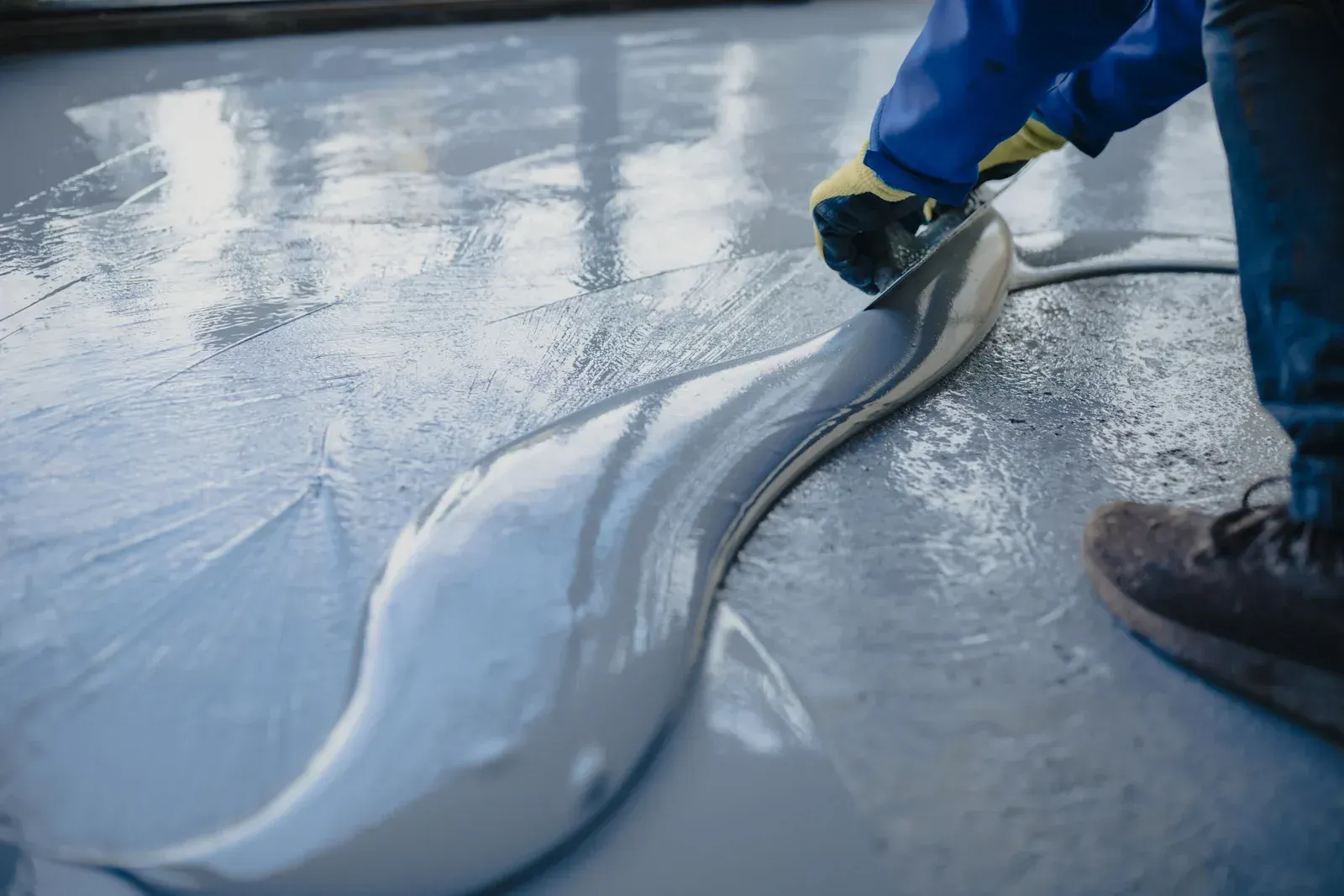
Epoxy and similar coatings are not paint. They cure through a chemical reaction between two parts, a resin and a hardener, that cross-link into a hard film and give off heat as they do it. The speed and completeness of that reaction depend directly on the temperature of the air, the coating, and the concrete underneath.
The 50-Degree Line
Most standard coatings are built to be applied with a slab temperature somewhere between 50 and 90 degrees. Below about 50, the reaction slows to a crawl. The material turns thick and stubborn, it will not flow or self-level, and it can stay tacky for days. A useful rule of thumb from the coatings world: for every 18-degree drop below 70 degrees, cure time roughly doubles. A coating that would set in eight hours at 70 degrees can need around 18 hours at 50. Push the slab colder still, and many coatings that are not specifically formulated for low temperatures never fully cure at all.
The dangerous part is that a cold-cured floor can look finished. It skins over, it feels hard, and it fools the eye. Underneath, the cross-linking never completed, so the film never developed its designed strength or chemical resistance. That is the floor that scratches under a jack stand, discolors when road salt sits on it, and starts peeling within the first season.
Mixing and Blush Problems in the Cold
Cold turns the resin and hardener into thick, syrupy material that resists proper mixing. Poorly mixed or off-ratio coating cures soft, stays tacky, or cracks, and it traps air bubbles that become weak points. Slow cold curing also encourages amine blush, a waxy, whitish film that rises to the surface as the coating sets in cool, damp air. Blush is often invisible during the job, but it can slash the bond between coats, which is exactly how a top layer separates from the base and flakes off underfoot.
WARNING: Never let anyone heat your garage for a coating job with an unvented propane or kerosene salamander. Those heaters dump water vapor and carbon dioxide into the air, and both react with the curing coating to create surface contamination and blush. The floor may cure looking acceptable and then delaminate weeks later. Electric or vented heat that warms the slab evenly is the safe path.
Moisture Is the Silent Bond-Breaker
Temperature gets the headlines, but moisture quietly causes more cold-climate coating failures than anything else. It attacks from two directions at once.
Vapor Rising Through the Slab
Concrete sits on ground that holds water, and that moisture constantly tries to travel upward through the slab as vapor. Installers call this moisture vapor transmission. A garage slab poured without an intact vapor barrier, or one near a high water table, can push enough moisture up through the concrete to lift a coating off from below within the first year. You cannot see it happening. You just see bubbles, then peeling, appearing in patches across an otherwise clean-looking floor.
This is why a moisture evaluation belongs in every serious prep process. A calcium chloride test or an in-slab humidity probe tells the crew whether the concrete is dry enough to coat, or whether a moisture-mitigation primer needs to go down first. Skipping that test to stay on schedule is one of the most common reasons a coating fails months after everyone has gone home.
Condensation on Top of the Slab
The second moisture threat forms on the surface. Cold concrete can drop below the dew point of the air in the garage, and when it does, a microscopically thin film of condensation forms on the slab even when the floor looks and feels dry. Coat over that, and the resin bonds to water instead of concrete. Professionals guard against this by confirming the slab sits several degrees above the dew point before anything goes down. In an unheated Eastern Iowa garage during a damp cold snap, that window can be narrow, which is another reason timing and slab conditioning matter so much.
Surface Prep Is Where Adhesion Is Won or Lost
Even a warm, dry slab will reject a coating if the surface is wrong. Fresh concrete carries a smooth, weak skin and a dusty layer called laitance, plus years of embedded oil, tire residue, and cleaning chemicals in a working garage. A coating laid over that grabs the dirt, not the concrete.
Proper prep means mechanically opening the surface, usually with diamond grinding or shot blasting, until the slab has a clean, slightly rough profile that the coating can key into. Grinding also exposes and lets the crew fill cracks and pits before coating, so those spots do not telegraph through or become failure points later. After grinding, the clock starts. A freshly profiled slab is porous and hungry, and it will pull in dust, moisture, and airborne contaminants fast, so it needs to be coated promptly rather than left open for days.
TIP: Before you book any install, ask exactly how the crew will profile your slab and how they will confirm it is dry and warm enough to coat. A clear answer that includes grinding or shot blasting, crack repair, a moisture check, and slab-temperature control is the sign of a process built for cold-climate concrete. A vague answer about a quick acid wash and a same-day coat is a red flag.
Freeze-Thaw and Road Salt Make Prep Non-Negotiable
Eastern Iowa garages face a specific combination that warmer regions never deal with. Every winter, water works into the concrete surface, freezes, expands, and thaws, over and over. That freeze-thaw action stresses the top layer of the slab and, over time, can spall and weaken untreated concrete. A coating installed over already-stressed or flaking concrete inherits that weakness.
Road salt makes it worse. Your tires carry brine and salt crystals straight into the garage from streets in North Liberty, Cedar Rapids, and everywhere between. Salt draws and holds moisture, and it works into unsealed concrete and any gap in a coating. A properly prepped and fully cured coating seals the surface against that salt-laden meltwater. A rushed, cold-cured, poorly bonded coating gives the salt a path underneath, where it accelerates the exact peeling and delamination you were trying to prevent. In this climate, thorough prep is not an upgrade. It is the difference between a floor that lasts and one that fails.
How Proper Cold-Climate Prep Prevents Failure
Put the pieces together and a reliable cold-weather install follows a clear sequence. The crew measures the actual slab temperature, not the air. They grind or shot-blast to a sound, clean profile and repair cracks. They evaluate moisture and, if needed, apply a mitigation primer. They warm the slab evenly and hold that temperature through the entire cure window, not just during application, because the reaction has to finish warm to reach full strength. They confirm the slab stays above the dew point so no condensation forms. Then they choose a coating chemistry suited to the conditions and give each coat the time it needs.
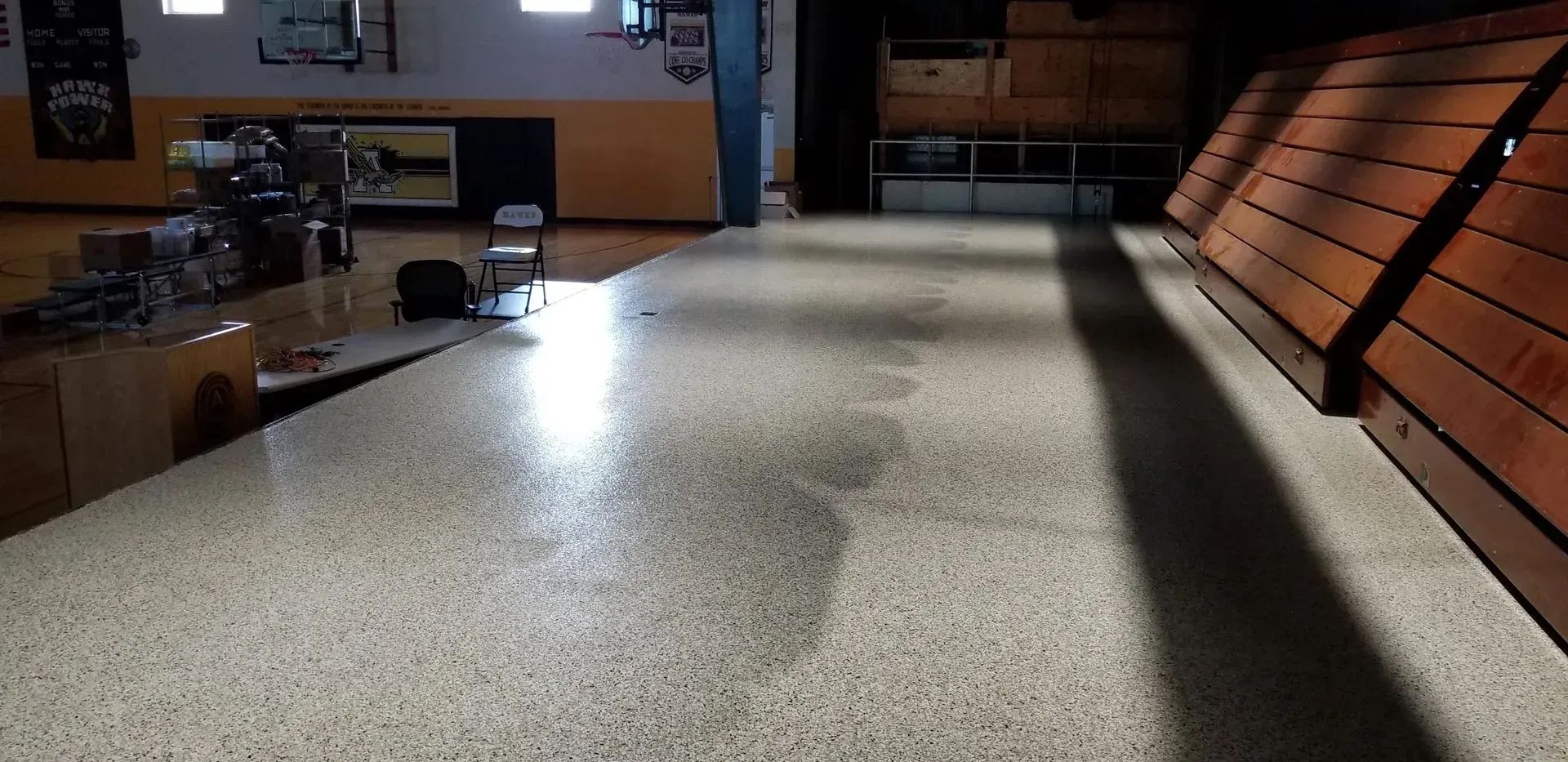
None of these steps is glamorous, and none shows up in a glossy after photo. All of them are the reason one floor still looks new after five Iowa winters while an identical-looking floor across town is peeling by March. When you understand what the prep is protecting against, you can tell the difference between a crew doing it right and one cutting corners you will pay for later.
Frequently Asked Questions
Can a garage floor be coated in winter in a cold climate?
Yes, but only with real climate control. The slab must be brought up to and held within the coating's required temperature range using heat that adds no moisture to air.
My coating looked perfect for months, then started peeling. Why?
That pattern points to moisture or an incomplete cold cure, not surface damage. Vapor, trapped condensation, or a coating that skinned over without fully cross-linking can look fine and fail.
Does the concrete really need to be ground before coating?
For a durable result, yes. Grinding or shot blasting removes the weak surface skin and contaminants, creating the rough profile a coating needs to bond. Acid wash alone falls short.
How does road salt damage a coated garage floor?
Salt tracked in on tires holds moisture against the concrete and works into any crack or gap in the coating. On a poorly bonded floor, it loosens the film beneath.
Is a moisture test really necessary in my garage?
Yes. A moisture test tells the crew whether the slab is dry enough to coat or needs a mitigation primer. Slabs over damp ground can fail a coating from below.
Cold-Climate Prep Makes the Difference That Lasts
A garage floor coating does not fail because coatings do not work in cold regions. It fails when a cold, damp, or dirty slab gets treated like a warm, dry one. Correct slab temperature, proper moisture evaluation, and thorough mechanical profiling are what separate a floor that shrugs off five Iowa winters from one that peels by March. These steps take more time and care than a quick acid wash and same-day coat, but they are what actually protect the investment underneath the finish.
CGI Epoxy Flooring
has spent more than 20
years learning how concrete behaves through Eastern Iowa's freeze-thaw cycles, road salt, and shoulder-season swings, and that experience shapes every install approached in Iowa City. Understanding what happens beneath the surface, rather than just what a floor looks like on day one, is what allows a coating to hold its bond through the exact conditions that break down a rushed job, season after season, without losing strength.