
Garage Floor Chalky or Flaking Every Spring? What Road Salt Is Doing to Your Concrete

August 30, 2026

Quick Answer: Road salt carried in on tires and boots does not just leave a white mess on your garage floor. It draws moisture into the concrete, keeps that concrete wetter than it would otherwise be through freezing temperatures, and reacts with the cement paste itself, which accelerates surface flaking, pitting, and cracking that untreated concrete cannot resist on its own. A sealed or coated slab blocks that moisture and salt from reaching the concrete, which is the difference between a garage floor that looks the same in ten years and one that is crumbling by the third winter.

Why Your Garage Floor Takes the Worst of Winter

Your driveway and street get plowed and salted directly, but your garage floor absorbs a concentrated version of the same punishment every time a car pulls in. Snow and ice packed into wheel wells and door sills melts once the vehicle sits indoors, and that meltwater carries whatever was on the road with it. Rock salt, brine, and the calcium or magnesium chloride blends many municipalities use in colder snaps all end up puddled under your car and along your garage floor's low points. Unlike a street, which dries and gets rained on and diluted, an enclosed garage keeps that salty water sitting on the same few square feet of slab for hours or days at a time.


Sodium chloride, the classic rock salt, has been used on American roads since the 1930s because it is inexpensive and effective, but it stops working well once temperatures drop much below the mid-teens. That is exactly why departments of transportation and property owners alike increasingly rely on calcium chloride and magnesium chloride, both of which melt ice at far colder temperatures than plain rock salt. Those chloride blends are more aggressive on concrete than standard rock salt, and they are the ones most likely to end up dripping off your bumper and pooling on your garage slab during a hard freeze.

The Freeze-Thaw Cycle Road Salt Makes Worse

Concrete is porous. Even a dense, well-cured slab has a network of tiny capillaries that hold water. Under normal conditions, that water freezes, expands by roughly nine percent, and puts stress on the surrounding concrete. A properly finished slab with enough air pockets built into the mix can absorb that expansion without damage, which is why plenty of uncoated garage floors survive for years with no real issue.


Road salt changes the equation. Salt-laden water raises how saturated the concrete becomes, because dissolved chlorides hold onto moisture and pull additional water into the pore structure rather than letting it evaporate. Once a slab crosses a critical saturation threshold, typically cited at somewhere around 85 to 87 percent of its total pore volume, even a single freeze cycle can cause cracking that would never happen in drier concrete. Your garage floor does not need years of exposure to start showing damage. It needs enough salty meltwater sitting in the same spot through a handful of hard freezes.


Why the Corner Under Your Bumper Goes First

Notice how the damage on an uncoated slab tends to start in one predictable spot, right where the front bumper or rear wheels sit when the car is parked. That is not coincidence. It is the lowest, wettest, most consistently salted patch of concrete in the whole garage, and it is the first place saturation builds toward that critical threshold. Once you see chalky white residue, small pits, or flaking there, the rest of the slab is usually not far behind if the exposure continues unaddressed.

Chemical Damage, Not Just Physical Cracking

Freeze-thaw expansion is only half of what road salt does to your garage floor. The chloride ions in deicing salts also react directly with compounds in the hardened cement paste. Calcium hydroxide, a normal byproduct of curing concrete, dissolves more readily as temperatures drop toward freezing, and the chlorides from deicers accelerate that process. As the calcium hydroxide leaches out, the concrete near the surface becomes more porous and weaker, which lets even more salt water soak in and speeds the whole cycle along.


With magnesium and calcium chloride blends in particular, the chemistry can go a step further. Those ions can combine with dissolved calcium in the concrete to form expansive compounds within the cement paste itself, distinct from ordinary freeze-thaw cracking. The visible result on a garage floor is the same either way: a chalky, whitish surface haze, shallow pitting, and thin flakes of concrete lifting away, usually concentrated in the areas that stay wettest the longest.

TIP: Walk your garage in early spring and run a hand over any area that looks dusty, chalky, or slightly rough compared to the rest of the slab. That texture change is often the first sign of surface scaling from salt exposure, and catching it early gives you far more options than waiting until chunks of concrete are visibly missing.

Why Sweeping and Rinsing Alone Cannot Solve This

A lot of homeowners assume that hosing down the garage floor a few times a winter or sweeping up visible salt residue is enough protection. Those habits actually help and are worth keeping up, but they only remove salt sitting on top of the concrete. They do nothing for the chloride ions that have already migrated into the pore structure during the hours or days that meltwater sat there before you got around to cleaning it. Bare concrete has no barrier layer, so every winter adds another round of saturation and chemical exposure on top of whatever damage already happened the year before. Cleaning habits slow the problem. They do not stop it, because the concrete itself has nothing standing between it and the next puddle of brine.

Uncoated Concrete Has No Real Defense

Untreated concrete is designed to be strong under compression, not to resist chemical attack from deicing salts. Without a barrier layer, every winter's meltwater has a direct path into the slab, and the damage compounds year over year rather than resetting each spring. Homeowners in this region often notice the pattern only after several seasons, when what looked like light surface dust has become visible pitting, a rough texture underfoot, or hairline cracks radiating from the worst-affected spots.


A sealed or coated garage floor changes that equation entirely. A properly installed epoxy, polyaspartic, or urethane system forms a continuous film across the entire slab, so salt brine sits on top of the coating instead of soaking into the concrete underneath. The chloride ions that would otherwise migrate into the pore structure and trigger both the freeze-thaw and chemical mechanisms described above simply have nowhere to go. Whatever is left after your car dries out gets swept or rinsed off the surface, not scrubbed out of the concrete itself.

What a Protective Coating Actually Needs to Handle

Not every coating product performs the same way under repeated salt exposure. A system built for a cold-climate garage should account for the full range of conditions your slab sees each winter, including repeated freeze-thaw cycling, direct contact with concentrated brine dripping off tires, and the physical abrasion of snow, grit, and boot traffic moving across the same few feet of floor for months at a time. Thin, single-coat products can look acceptable for a season or two and then start showing wear exactly where the salt exposure is heaviest, which tends to be the same bumper-and-wheel-well areas that damage untreated concrete first.


Proper surface preparation matters just as much as the coating itself. A slab needs to be mechanically profiled, usually through grinding, so the coating actually bonds to sound concrete rather than sitting on a weak surface layer. Skipping that step is one of the more common reasons a coating that should resist salt for a decade instead peels or wears through in a few years, right in the spots where road salt collects the most.

Reading the Signs Before They Get Worse

If you already have a coated floor, road salt is far less of a threat, but it is worth knowing what ongoing wear looks like so you catch it early. Dulling in high-traffic wheel paths, a change in texture along the edges of the coating, or salt residue that no longer wipes away as easily as it used to can all signal that the protective film is thinning in specific spots. Addressing those areas with a maintenance topcoat before the underlying concrete is exposed is far simpler and less disruptive than waiting for a full failure and having to start the process over.


If your garage floor is still bare concrete, the pattern to watch for is the one described earlier: chalky white haze, a rough or dusty texture change, small pits, or thin flakes lifting near the areas where your vehicle sits. None of those signs mean the slab is ruined, but each one means active deterioration is underway and will continue every winter salt keeps reaching the concrete.

Frequently Asked Questions

  • Does all road salt damage concrete the same way?

    No. Sodium chloride is generally less aggressive toward concrete. Calcium chloride and magnesium chloride penetrate more readily, increasing chemical reactions that accelerate surface scaling, pitting, and long-term deterioration alongside freeze-thaw damage.

  • My garage floor already has some pitting and flaking. Is it too late to coat it?

    Not necessarily. Damaged concrete should be repaired before coating. Removing loose material and addressing cracks allows the coating to bond properly and protects the slab from further deterioration.

  • Will parking mats or trays protect my garage floor from salt on their own?

    Parking mats help collect meltwater and reduce salt exposure, but they rarely cover every affected area. They limit moisture contact but cannot fully protect bare concrete like a continuous coating.

  • How quickly does salt damage actually show up on an uncoated garage floor?

    Damage varies with salt exposure and winter conditions. Many homeowners notice chalking or roughness after several winters, with deterioration gradually becoming more visible as repeated exposure continues.

Long-Term Protection Starts Below the Surface

For homeowners in Iowa City, IA, the biggest threat to a garage floor is often not the snow itself but the salt-filled meltwater that lingers after every winter drive. Over time, repeated exposure gradually weakens unprotected concrete, making springtime chalking, scaling, and flaking increasingly difficult to ignore. Understanding how moisture, deicing chemicals, and freeze-thaw cycles work together makes it easier to recognize early warning signs before they develop into more extensive surface deterioration.


With 20+ years of experience, CGI Epoxy Flooring understands how Iowa's winter conditions affect concrete over the long term. Whether a slab remains bare or is protected with a professionally installed coating has a significant impact on how well it withstands years of seasonal salt exposure. A well-prepared surface and an appropriate protective system help preserve both the appearance and structural integrity of the floor, allowing it to perform reliably through many winters without the gradual damage that untreated concrete commonly experiences.

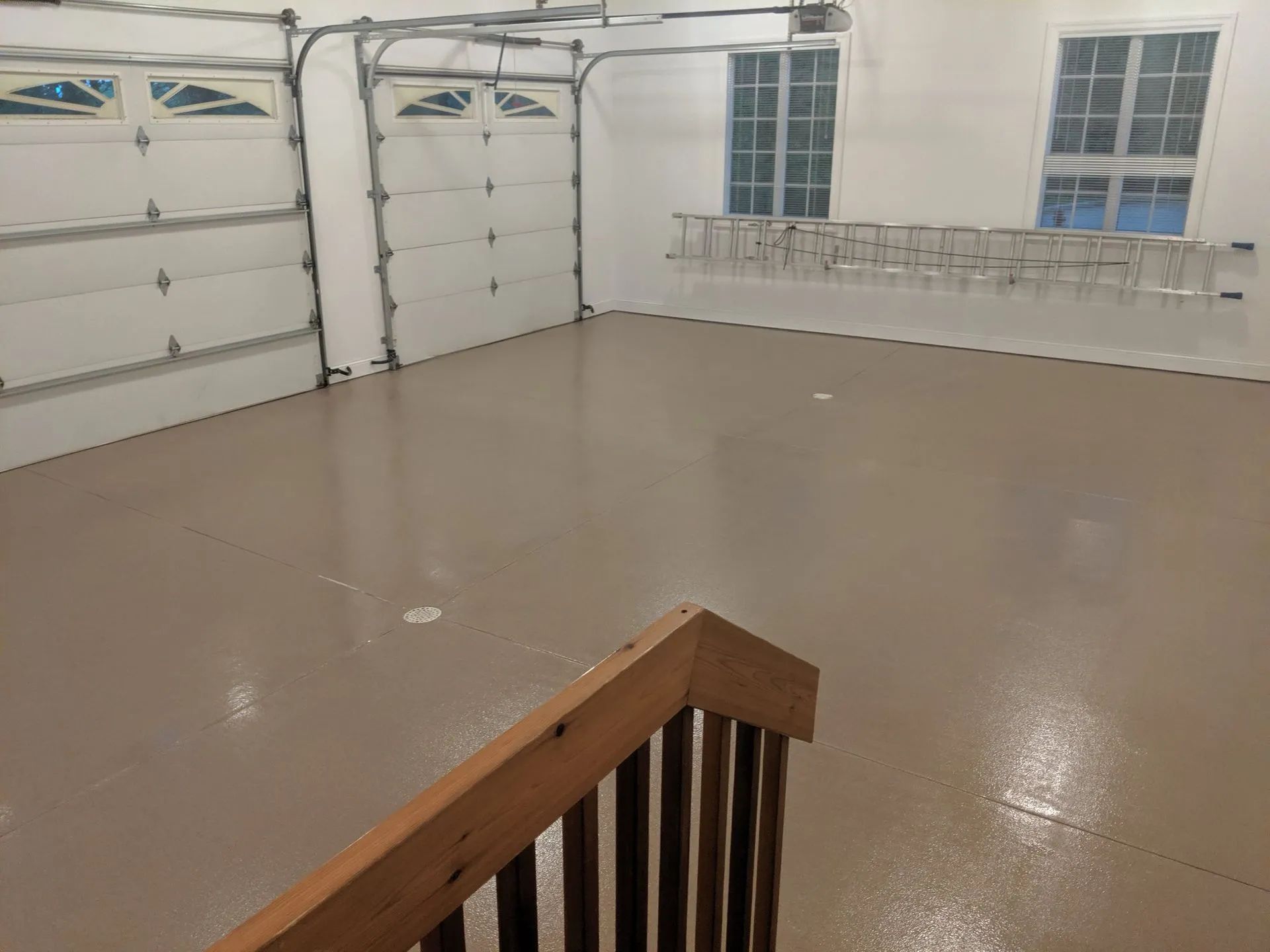
Empty garage with glossy floor, white walls, closed doors, windows, and a stair railing in the foreground
July 31, 2026
You paid for a coated garage floor that was supposed to shrug off tire marks, road salt, and dropped tools for years. Instead, a few months later you notice the finish lifting near the overhead door, a chalky haze in the corners, or sheets of coating that peel up when you drag a snow shovel across them. It looks like a bad product or a careless installer. Most of the time, the coating and the crew were not the problem. The problem started underneath, in a cold concrete slab that was never prepped and conditioned for the way coatings actually cure. Cold-weather regions like Eastern Iowa punish shortcuts. A garage floor in Iowa City, Coralville, or Marion spends months near freezing, absorbs snowmelt and road salt off your tires, and swings through freeze-thaw cycles that untreated concrete handles poorly. When a coating goes down over a slab that is too cold, too wet, or too dirty, it can look perfect on day one and still fail by spring. This article walks through the real reasons cold-climate garage coatings peel, bubble, and delaminate, and what proper preparation actually looks like. Quick Answer: Garage floor coatings in cold climates fail mostly because of what happens at the concrete surface before and during curing, not the coating brand. A slab below roughly 50 degrees never lets the resin reach full cure, moisture rising through the concrete or condensing on top breaks the bond, and inadequate grinding leaves contaminants that act as a release layer. Fix those three things with correct grinding, moisture evaluation, slab warming, and proper timing, and the coating holds.
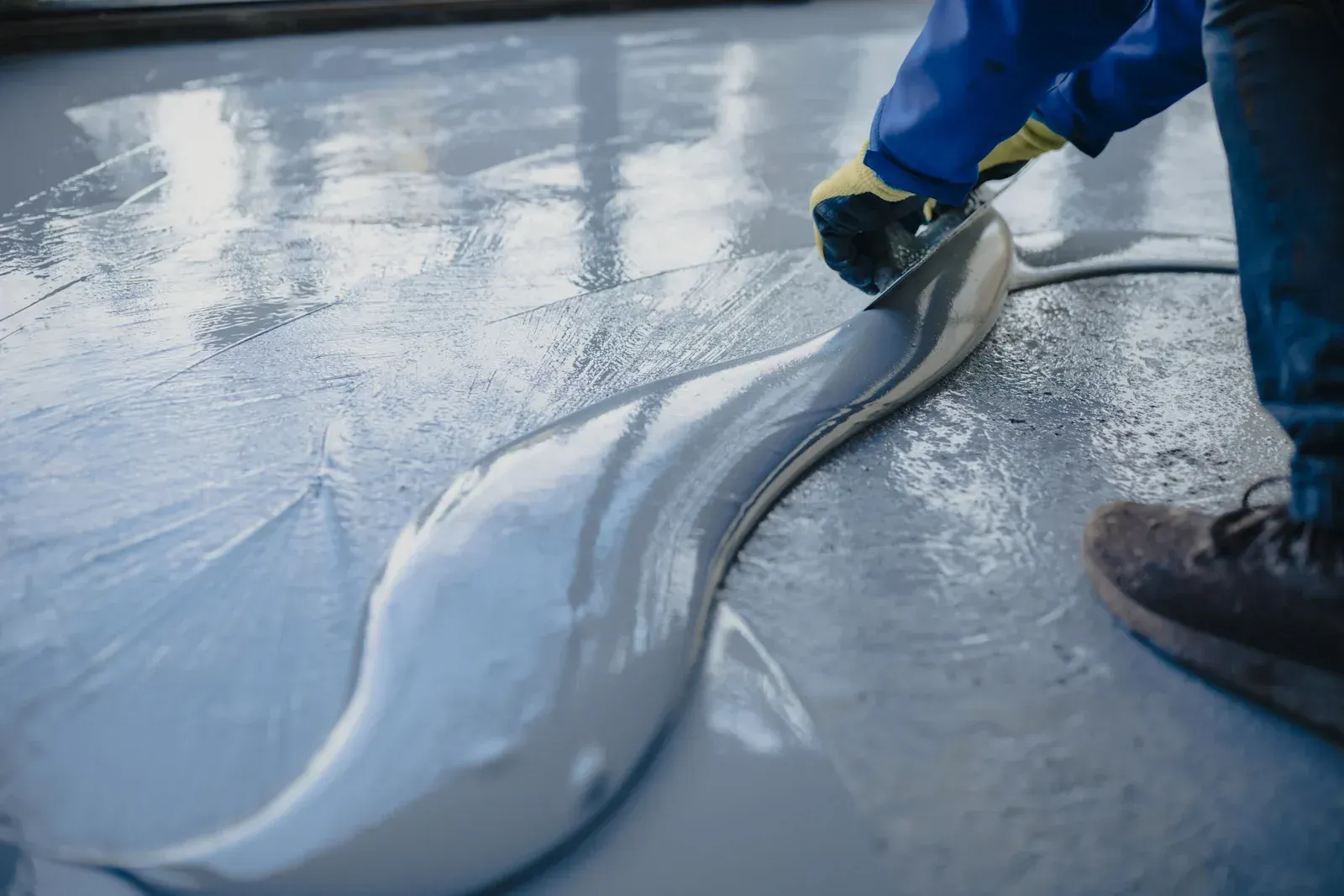
Worker spreading gray liquid coating on a floor with a trowel, blue-gloved hands visible
June 22, 2026
Learn how epoxy floors enhance safety, efficiency, & durability in warehouses. Contact CGI Epoxy Flooring for expert solutions!
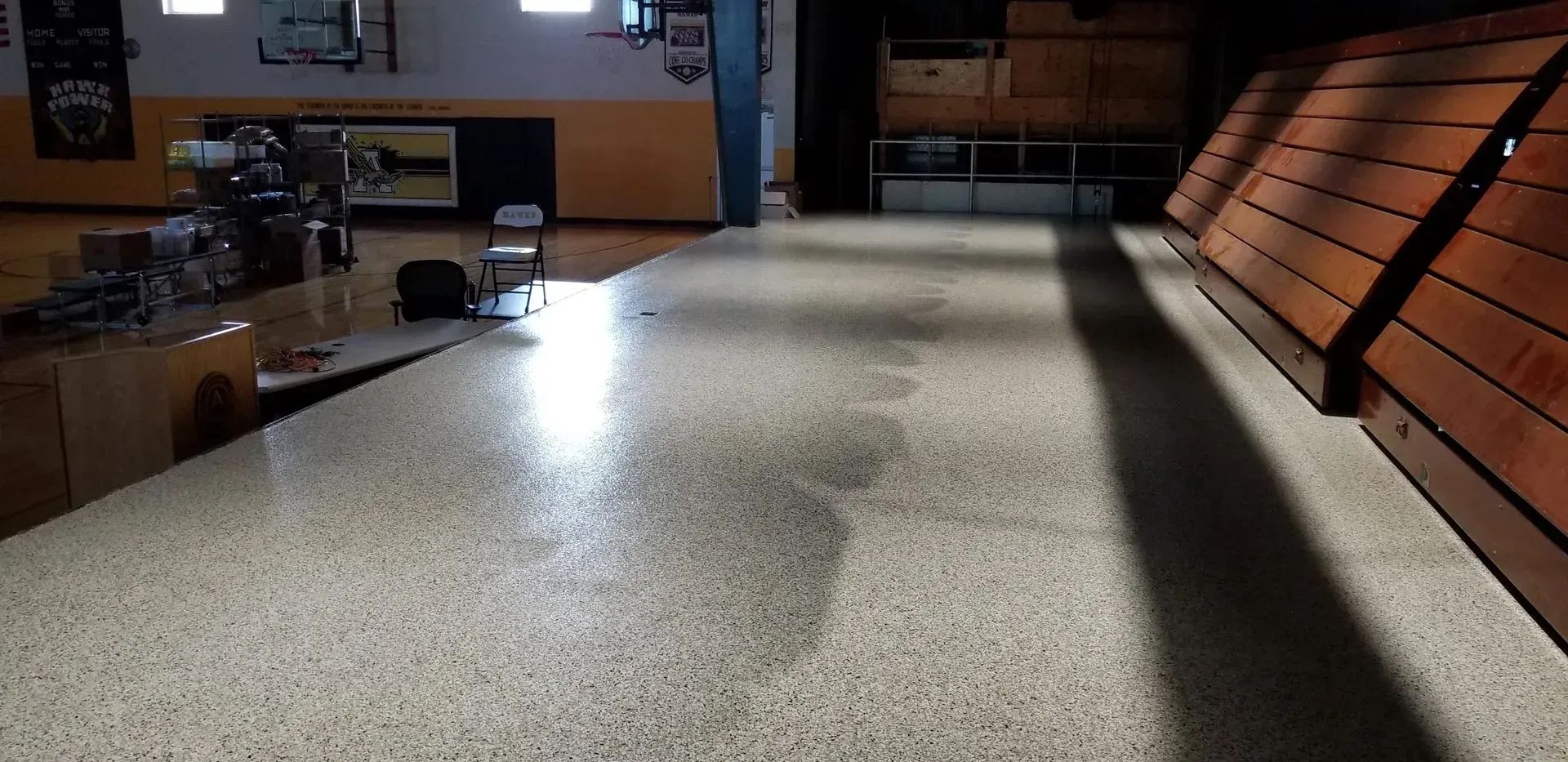
Empty indoor gym floor with wooden bleachers along the right side and tables in the back
May 26, 2026
Commercial and industrial facilities place constant demands on flooring systems every single day. Heavy machinery, forklift traffic, chemical exposure, moisture intrusion, temperature fluctuations, and continuous foot traffic all contribute to surface deterioration over time.