How Do Warehouse Epoxy Floors Improve Safety, Efficiency, and Durability?

June 22, 2026

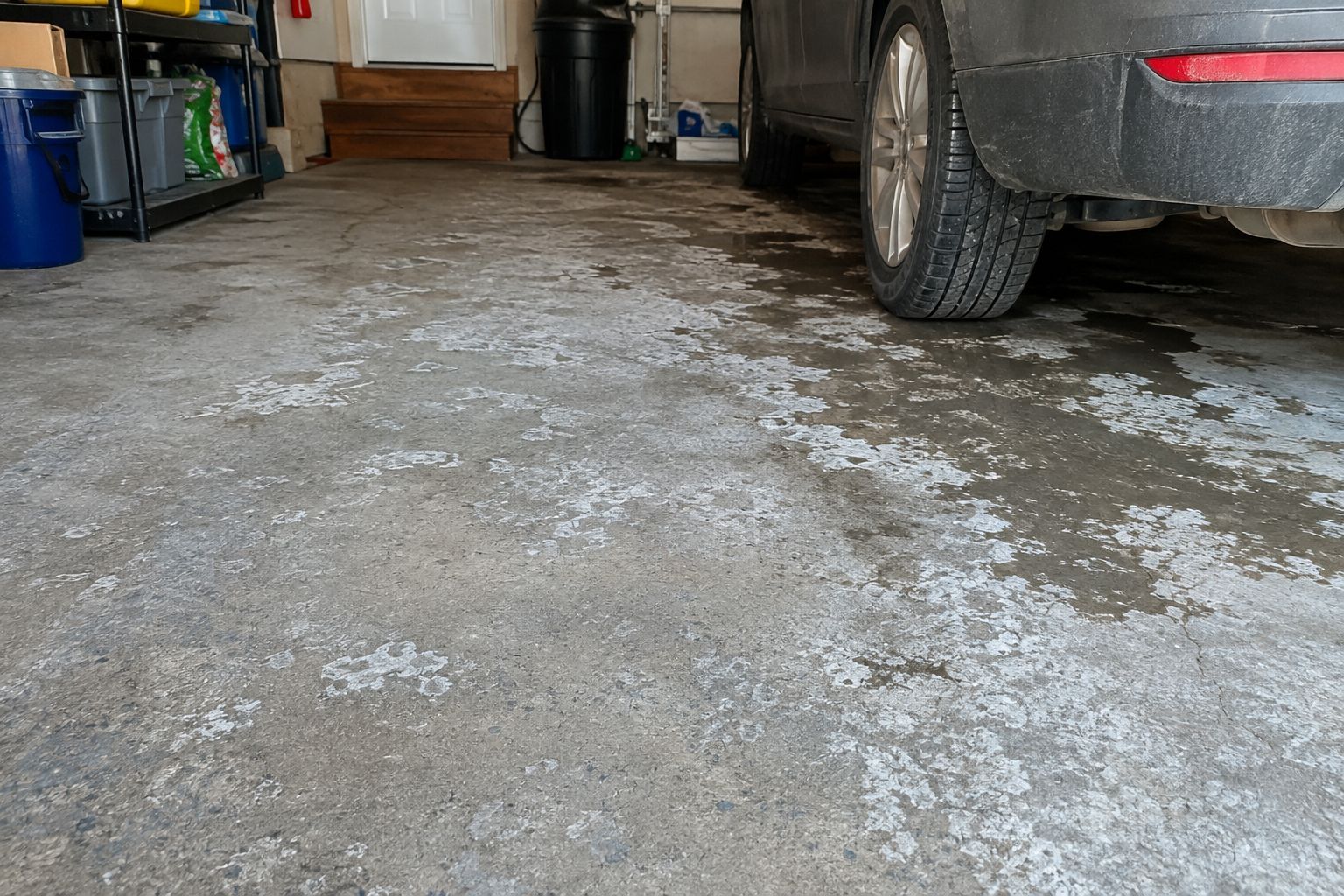
Picture a warehouse where forklifts run constant laps across bare concrete that has spent years absorbing oil drips, spills, and moisture. The surface is dull, pitted in a few spots, and almost impossible to keep clean. Traction is inconsistent, lighting feels dim even with overhead fixtures on, and every winter cycle of freeze and thaw that Iowa City sends through puts more fine cracks into the slab. That is the floor that warehouse managers live with until they decide to do something about it.


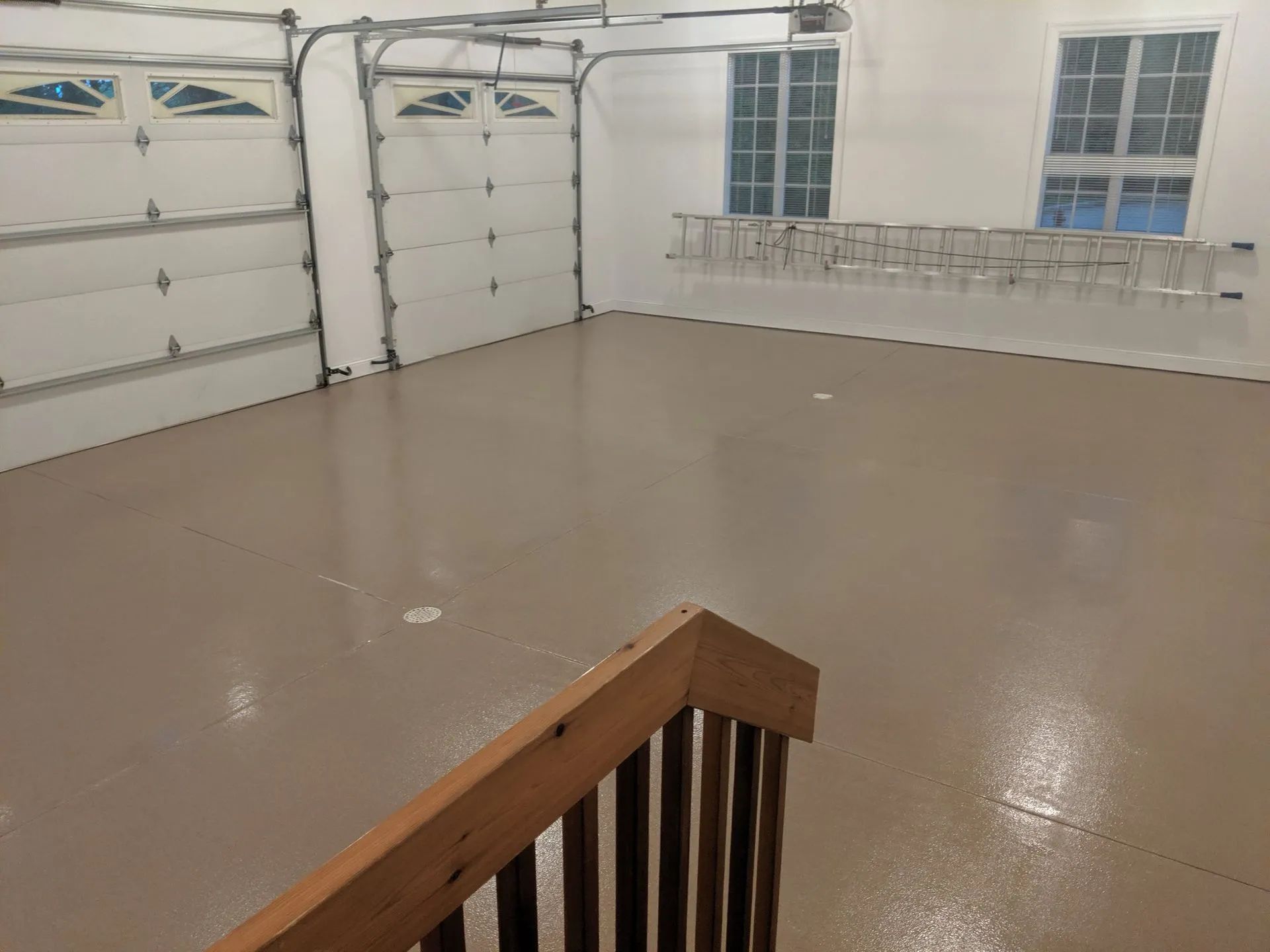
Warehouse epoxy flooring solves the problem at the structural level, not just the surface level. A properly installed epoxy system bonds to the concrete chemically, sealing it against moisture vapor transmission, chemical penetration, and abrasion simultaneously. What you get is not just a prettier floor. You get a floor that actively contributes to how safely and productively your operation runs every day.

Why Bare Concrete Falls Short in a Working Warehouse

Concrete is porous by nature. Uncoated warehouse slabs absorb hydraulic fluid, battery acid, cleaning chemicals, and water at a rate that accelerates surface degradation. Once contamination soaks in past the top 1/8 inch of the slab, standard cleaning cannot extract it. That contaminated surface becomes slippery under foot traffic, creates dust that coats racking and inventory, and weakens the concrete over time through a process called alkali-silica reaction.


In Iowa City, the thermal cycling between summer humidity and subzero January temperatures creates expansion and contraction stress that bare concrete handles poorly. Moisture vapor migrates up through uncoated slabs from the soil below, especially in facilities near the Iowa River corridor or on sites with higher water table readings. That moisture creates a film on the surface that cuts traction numbers significantly. Industry testing on bare industrial concrete puts average slip resistance at a dynamic coefficient of friction around 0.30 to 0.40. A properly installed epoxy system with aggregate broadcast brings that number up to 0.60 or higher, which is the range that materially reduces slip-and-fall incidents during daily warehouse operations.


Durability starts with surface prep. On service calls, we frequently find that previous coating failures were not a product problem. They were a preparation problem. Epoxy that peels within 12 to 18 months almost always comes off a slab that was never ground or shot blasted to achieve the correct surface profile. A concrete surface profile of CSP 3 or CSP 4, per the International Concrete Repair Institute scale, is the minimum needed for a warehouse-grade epoxy system to achieve the 1,000 psi or greater tensile bond strength that forklift traffic demands.

The Safety Impact of Warehouse Epoxy Floors

The three safety improvements that warehouse operators notice first are slip resistance, visibility, and chemical containment.


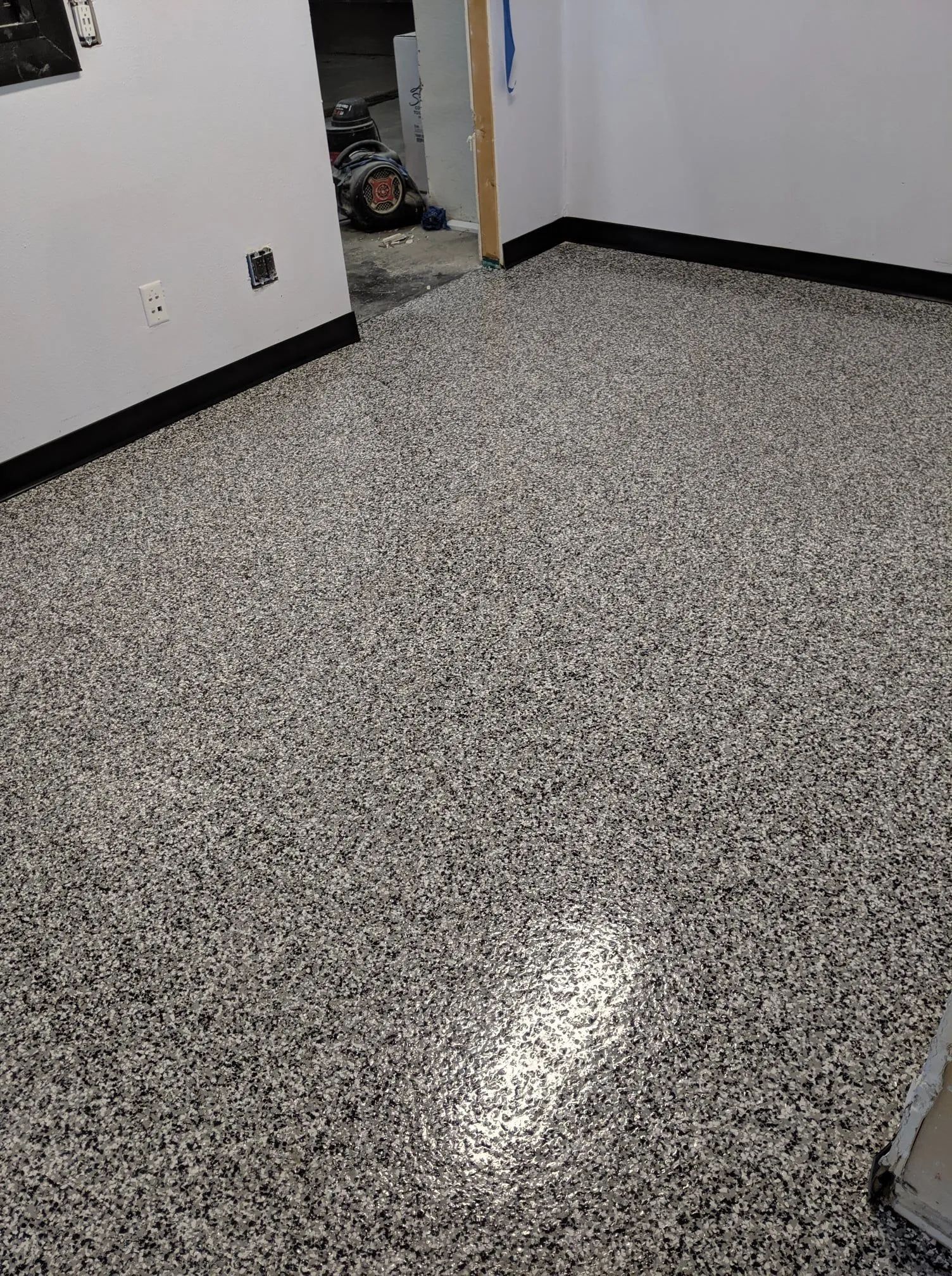
Slip resistance under load. Broadcast systems use aluminum oxide, quartz, or silica aggregate worked into the base coat while it is still wet. The aggregate stays locked in the cured surface permanently. Unlike floor tape or painted lines that wear smooth under pallet jack wheels in six to eight months, the aggregate in a broadcast epoxy system does not flatten under traffic. We see facilities that have run the same broadcast floor for seven to ten years with no measurable reduction in surface texture.


Reflectivity and visibility. Light-colored epoxy floors, typically light gray or white base systems, reflect 200 to 300 percent more ambient light than bare concrete. In a warehouse with standard bay lighting, that reflection reduces shadow zones in aisles and near racking columns. Operators identify obstructions faster. Pick accuracy improves. The floor effectively extends the reach of your existing lighting investment without adding a fixture.


Chemical containment. Properly installed epoxy creates an impermeable membrane across the slab. Hydraulic fluid, battery charging spillover, and cleaning chemicals bead on the surface instead of penetrating. Cleanup time drops from 20 to 30 minutes per spill on bare concrete to under five minutes on a sealed epoxy surface. In facilities storing food products or regulated materials, the ability to contain and remove spills cleanly matters for internal inspection standards as well.

How Warehouse Epoxy Floors Improve Operational Efficiency

The efficiency gains from warehouse epoxy floors show up in three areas: floor marking longevity, equipment wear, and cleaning labor.


Floor marking that stays put. Painted line markings on bare concrete last four to six months in high-traffic aisles before they need recoating. Markings applied over a properly installed epoxy system, or incorporated as a second color coat during the original installation, last three to five years under comparable traffic. For a facility that relies on aisle designations, forklift lanes, and safety zones to organize movement, that difference in repainting frequency represents real labor and downtime savings.


Reduced equipment wear. Rough, pitted concrete creates vibration and resistance that translates into higher wear on forklift tires, pallet jack wheels, and casters. A smooth, hard epoxy surface reduces rolling resistance, which extends tire life and reduces the micro-vibration that fatigues both equipment and operators over long shifts. We have seen facilities extend their forklift tire replacement interval by 15 to 20 percent after transitioning from rough bare concrete to a polished epoxy system.


Cleaning speed and labor. Dust mopping bare concrete on a 20,000 square foot warehouse floor takes approximately two hours per session and still leaves concrete dust suspended in the air. The same facility with an epoxy surface completes the same cleaning pass in 45 to 60 minutes because the sealed surface does not generate concrete dust and does not trap debris in surface pores.

Diagnostic Table: Common Warehouse Floor Problems and Epoxy Solutions

What You Are Seeing Most Likely Cause Severity First Step
Concrete dust on inventory and equipment Uncoated slab surface degrading Medium Schedule surface prep assessment
Slippery surface near loading docks Moisture vapor or condensation on bare concrete High Test moisture vapor emission rate before coating
Forklift tire marks that will not clean off CandicePorous uncoated concrete absorbing tire rubber Low Install sealed epoxy system with closed-cell surface
Cracked and pitted surface in high-traffic lanes Freeze-thaw cycling and surface abrasion High Full crack repair and epoxy resurfacing
Floor markings fading in under six months Paint over unprimed bare concrete Low Restripe over properly installed epoxy base
Oil stains spreading despite mopping Concrete porosity allowing penetration Medium Shot blast contaminated zones before coating
Coating peeling in sections near drains Moisture vapor migrating up through slab High Moisture test and install vapor-barrier primer system
Yellow discoloration on existing coated floor Standard epoxy base coat without UV-stable topcoat Low Topcoat with polyaspartic or polyurethane clear

Certified Epoxy Professionals Transforming Iowa City Warehouse Floors

Warehouse epoxy flooring delivers real, measurable improvements to slip safety, cleaning efficiency, forklift equipment wear, and floor marking longevity when the system is installed on a correctly prepared surface with the right coating stack for the facility's conditions. Iowa City's climate adds variables that generic installation guides do not account for: moisture vapor from local soil conditions, thermal cycling between seasons, and cold-weather scheduling constraints that affect cure quality. Getting those variables right from the start determines whether a warehouse floor lasts seven years or fifteen.


CGI Epoxy Flooring brings 20-plus years of commercial and industrial flooring experience to warehouse projects across Iowa City, Iowa. We assess moisture conditions, surface profile, and traffic patterns before specifying a system, not after. If your warehouse floor is showing wear, contamination, or failing to hold line markings, we can walk you through exactly what the slab needs and what a proper installation looks like for your facility.

FAQs

  • How long does warehouse epoxy flooring last under forklift traffic?

    A properly installed epoxy system with a polyaspartic topcoat lasts 10 to 15 years under normal forklift traffic. Heavy sit-down forklifts running the same travel lanes daily may see wear closer to seven years. Annual topcoat inspections and periodic refreshes extend the base system without full reinstallation.

  • Does epoxy flooring make warehouse floors slippery when wet?

    Standard gloss epoxy without texture can become slippery when wet. We always broadcast aluminum oxide or quartz aggregate into the base coat during warehouse installations. This creates a surface texture that maintains a dynamic coefficient of friction above 0.60 even with water or light oil present.

  • Can epoxy floors be installed in a warehouse without shutting down operations?

    Yes, through zone scheduling. We coat one section while operations continue elsewhere in the facility. A typical 20,000 square foot warehouse completes installation over three to five nights or weekends. Iowa City winter temperatures extend cure times, so fall scheduling before temperatures drop below 55 degrees Fahrenheit works best.

  • What is the difference between epoxy and polyaspartic flooring for warehouses?

    Epoxy provides the thick, high-build base coat that bonds to concrete and delivers compressive strength. Polyaspartic serves as the topcoat because it cures faster, resists UV yellowing, and handles temperature extremes better. Most commercial warehouse systems use both together for a complete, long-lasting floor coating system.

  • How does Iowa City's climate affect warehouse epoxy installation timing?

    Iowa City winters push slab temperatures below the 55 degree Fahrenheit minimum epoxy requires for full cure. Installing below that threshold leads to delamination within the first year. We schedule warehouse projects between April and October and use heated enclosures when colder month installations cannot be avoided.

Empty indoor gym floor with wooden bleachers along the right side and tables in the back
May 26, 2026
Commercial and industrial facilities place constant demands on flooring systems every single day. Heavy machinery, forklift traffic, chemical exposure, moisture intrusion, temperature fluctuations, and continuous foot traffic all contribute to surface deterioration over time.