Where Epoxy Flooring Works Best in a Home
Quick Answer: Epoxy flooring performs best over concrete slabs that sit on or below grade and don't flex — basements, laundry rooms, mudrooms, workshops, and garages are the classic candidates. It struggles on upper-floor rooms with wood-frame subfloors, since cured epoxy is a rigid film that cracks when the substrate underneath it moves even slightly. Below-grade rooms need a moisture check before installation; concrete testing under ASTM F1869 or F2170 generally calls for vapor emission at or under about 3 pounds per 1,000 square feet per day, or slab relative humidity at or under roughly 75 to 80 percent, before a standard epoxy system goes down. Rooms with heavy direct sun, like south-facing additions, are workable but need a UV-stable topcoat, since standard epoxy resin yellows under prolonged sunlight.
A homeowner in Coralville called us this spring wanting one thing done: epoxy on every hard floor in her house, from the basement rec room up to a sunroom addition built over a wood-framed deck. The basement was an easy yes. The sunroom was not. Its subfloor was plywood over floor joists, not concrete, and it gave slightly underfoot near the exterior wall. Epoxy doesn't bend. Ask it to sit on a surface that moves and it cracks, sometimes within months of the pour. That visit is a decent snapshot of what this article gets into:
epoxy flooring is not a whole-house product, even though a lot of marketing photos make it look that way. It thrives in specific rooms and fights back in others, and knowing which is which before signing anything keeps you from tearing out a floor a year and a half later.
What Actually Makes a Room a Good Candidate
Every room that takes epoxy well shares a few traits. Miss one of them and the coating is working against its own substrate from day one.
A Concrete Slab, Not A Wood Subfloor
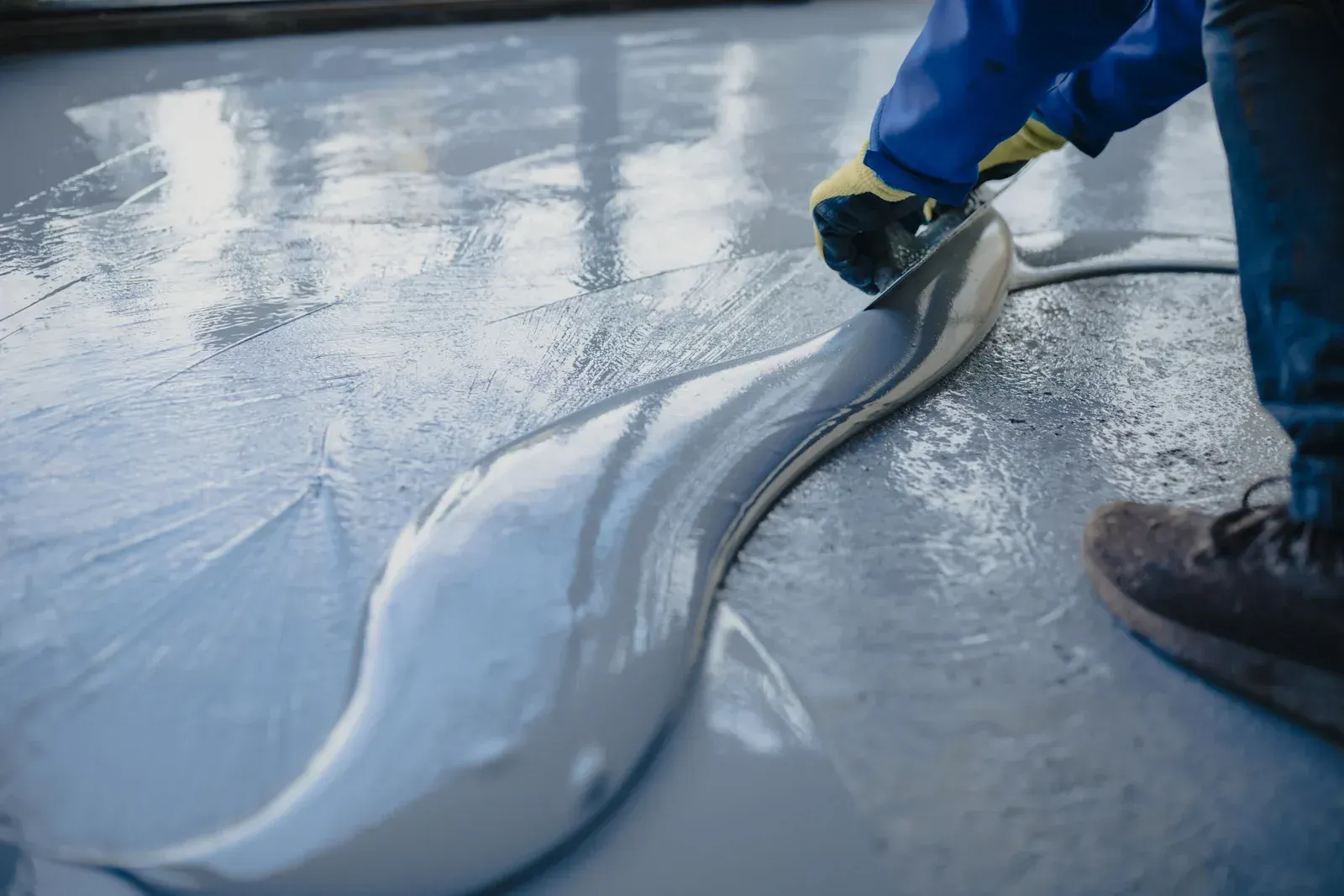
Standard epoxy forms a thin, rigid film bonded to concrete. Unlike plywood or OSB, concrete does not flex significantly, reducing movement that can crack epoxy along seams or heavily traveled areas.
A Slab On Or Below Grade
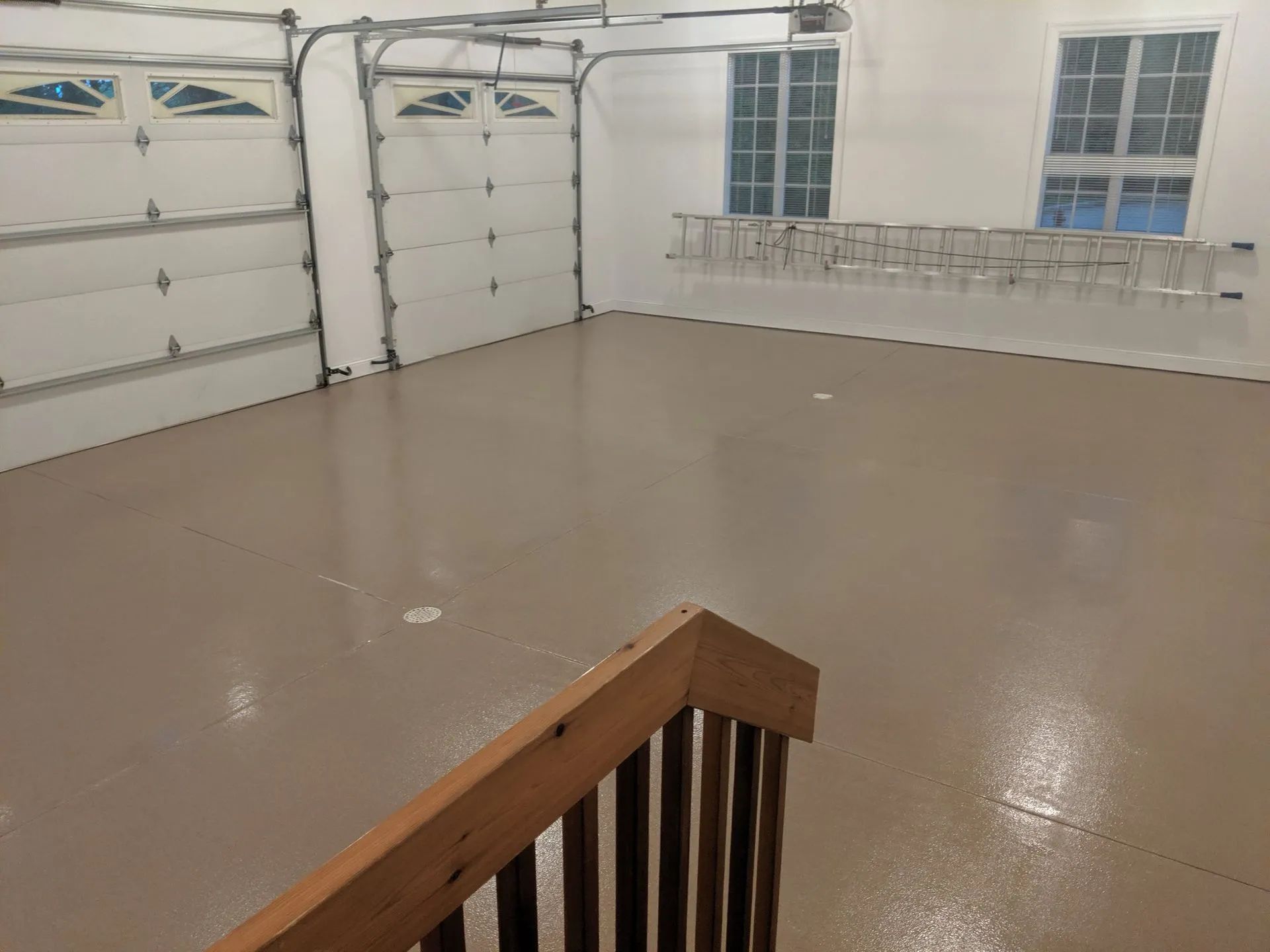
Basement, garage, and most main-level Iowa rooms poured directly over concrete slabs qualify. Second stories and framed additions generally use joists instead, making them unsuitable for standard slab-applied epoxy systems.
A Slab Dry Enough To Trust
Concrete absorbs moisture, especially below grade where soil can push moisture upward. Testing the slab before installation confirms whether moisture levels are suitable, helping prevent coatings from lifting or failing prematurely.
Enough Curing Time Behind It
New concrete typically needs several weeks, sometimes longer, before coating. A freshly poured slab may remain too wet for epoxy even when outdoor conditions appear favorable and dry.
Basements: The Room Epoxy Was Basically Built For
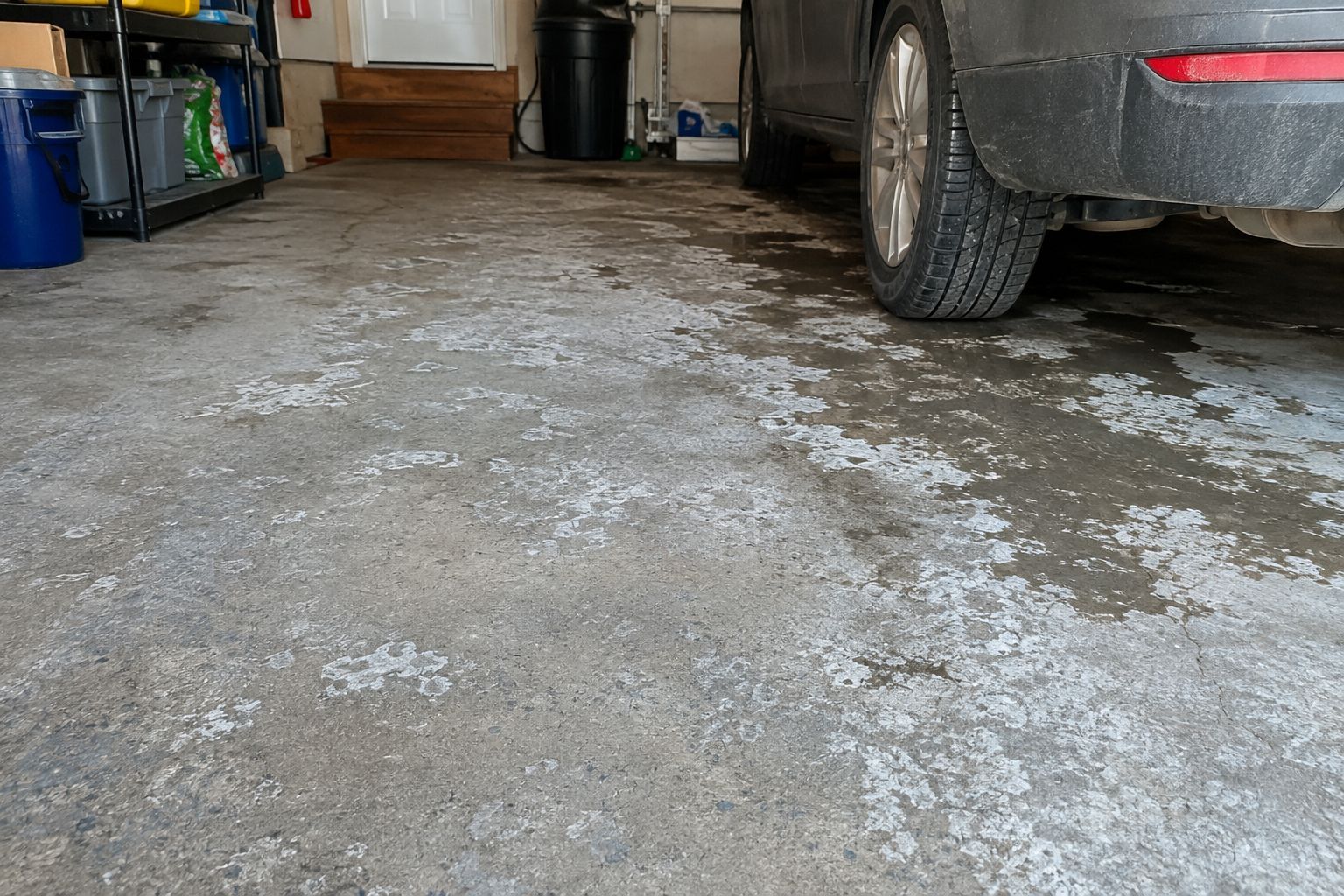
Iowa basements take a beating that most rooms upstairs never see. Foundation walls sweat during humid summers. Groundwater pushes against the slab from below all winter, and freeze-thaw cycles in the surrounding soil put steady pressure on the concrete year after year. Untreated, that concrete dusts, pits, and stains from everything a basement gets used for — storage boxes, a treadmill, a dehumidifier that eventually leaks.
A properly installed epoxy system seals that surface against moisture intrusion and gives you something you can actually mop instead of sweep. But "properly installed" is doing real work in that sentence. Below-grade slabs are the rooms most likely to fail moisture testing, and a coating applied over a slab that's still pushing vapor upward will bubble, peel, or lift in sheets well before it should. We test every basement slab before recommending a system, and in a fair number of Iowa homes that test changes which product goes down — a vapor-tolerant system in place of a standard one, or a different primer altogether.
TIP: Ask whoever tests your basement slab to run a calcium chloride or in-slab relative humidity check before recommending a coating system. A short reading tells you whether a standard epoxy will hold or whether the room needs a moisture-mitigating primer first — and it costs you almost nothing to find out before the floor goes down instead of after.
Laundry Rooms and Mudrooms: Built for Water and Salt
Few rooms in a Corridor-area home take on more moisture abuse than the laundry room and the mudroom sitting right off the garage. Every winter, boots track in road salt and slush, washing machines leak more often than anyone admits, and detergent spills sit on the floor longer than they should. Bare concrete in that spot stains fast and never really looks clean again once salt gets into its surface.
Epoxy handles that combination well because it seals the slab into one continuous surface with no grout lines or seams for water and salt to work into. A textured or flake finish also earns its keep here, since a wet mudroom floor with bare boots crossing it needs traction more than a garage floor does. These are usually smaller rooms too, which means less slab to prep and a shorter turnaround than a full basement.
Workshops, Home Gyms, and Hobby Rooms
A workshop floor lives a rough life — dropped tools, rolling toolboxes, the occasional puddle of motor oil or paint thinner. A home gym floor deals with a different kind of stress: repeated impact from dropped weights, sweat, and rubber mats that can react with some flooring finishes over time. Both rooms benefit from the same core trait that makes epoxy useful in a basement: a hard, chemical-resistant surface that doesn't absorb what gets spilled on it.
For workshops, a plain epoxy or a quartz-broadcast system resists chemical staining and abrasion from dragged equipment better than bare or sealed concrete does. For home gyms, a slightly textured finish keeps the floor from turning slick once it picks up sweat, and a quality topcoat holds up better under rubber mats than people expect.
Both of these rooms are almost always on-grade or below-grade slabs already, which is exactly why they show up so often on the "works well" side of this list.
Rooms That Fight an Epoxy Floor
Not every concrete-adjacent space in a house is a good match, and pretending otherwise is how homeowners end up with a floor that needs redoing.
Upper-Floor Additions And Rooms Over Crawl Spaces
If the subfloor is plywood or OSB rather than poured concrete, standard epoxy is the wrong tool. Flexible coating products built for wood substrates exist, but they behave differently and need an installer experienced with that specific system.
Rooms With Active Water Intrusion
A slab still taking on bulk water through a crack or failed foundation seal isn't a coating problem yet. It's a drainage and waterproofing issue, and coating over it just traps the water where you can't see it anymore.
Sunrooms And Rooms With Heavy Direct Sunlight
Standard epoxy resin yellows and can chalk under sustained UV exposure. A sunroom or room with south-facing windows can still work, but needs a UV-stable polyaspartic or urethane topcoat over the epoxy base instead of a bare finish.
WARNING: A cracked or actively leaking foundation wall is a drainage problem, not a flooring one. Coating over a slab that's still taking on bulk water traps moisture under the epoxy film and causes it to lift in sheets, sometimes within the first year the floor is down.
Getting the Prep Right Before Anyone Commits
The room matters, but prep decides whether that room's floor actually performs. Grinding the slab opens its surface so the coating can bond mechanically instead of just sitting on top like paint. Crack repair before coating keeps small fractures from telegraphing through the finish later. Moisture testing, especially in basements and any slab below grade, tells you which product family belongs in that specific room instead of guessing based on what worked somewhere else.
None of this is glamorous work, and it's easy to skip when a homeowner just wants a finished floor by the weekend. But a coating is only as good as what's underneath it. We've walked into plenty of homes where a previous DIY epoxy job looked fine for eight or nine months and then started lifting at the seams — almost always because the slab was never tested or ground before the coating went on.
Frequently Asked Questions
Can epoxy flooring go over a plywood subfloor?
Standard epoxy is not built for plywood or OSB. It's a rigid film, and wood subfloors flex and shift with humidity and foot traffic in ways that crack a cured coating. Flexible epoxy systems designed for wood substrates exist, but they're a different product entirely and need their own evaluation.
Does every basement need a vapor barrier before epoxy?
Not every basement, but every basement slab should get tested. Some Iowa basements test dry enough for a standard system. Others push enough moisture vapor to need a vapor-mitigating primer first. The only way to know is a calcium chloride or relative humidity test done before the coating schedule is set.
Is epoxy flooring a good choice for a home gym floor?
Yes, for most home gyms built over a concrete slab. A textured or matte finish handles sweat and repeated impact from dropped weights well. The one thing to flag with your installer is what kind of rubber mats you plan to use, since some mat materials can react with certain topcoats over time.
Will epoxy yellow in a room with a lot of natural light?
Standard epoxy resin can yellow or chalk under sustained direct sunlight. A sunroom or a room with large south-facing windows still works with epoxy, but it needs a UV-stable topcoat layered over the base coat rather than being left bare.
What about a laundry room with a floor drain?
A floor drain is easy to work around during installation and doesn't rule out epoxy. If anything, a sealed epoxy surface around the drain is an improvement over bare concrete, which tends to stain and pit in exactly that spot from years of dripped water and detergent.
How do I know if my slab is dry enough for epoxy?
You test it rather than guess. A calcium chloride test measures how much moisture vapor is coming off the slab surface over 24 hours, and an in-slab relative humidity probe measures moisture deeper in the concrete. Both are standard steps before a below-grade or on-grade slab gets coated.
Matching the Right Floor to the Right Room
Not every concrete floor in a house is asking for the same coating, and pretending otherwise is what leads to redos. A basement slab tested and prepped correctly can handle decades of moisture pressure and daily wear without complaint. A sunroom over a wood subfloor, or a slab still pushing vapor upward, needs a different answer entirely, whether that's a flexible system, a UV-stable topcoat, or simply waiting until the moisture problem gets solved first.
CGI Epoxy Flooring
has spent 20+ years testing slabs and matching coating systems to homes across Iowa City, IA, learning which rooms reward the investment and which ones need honest pushback instead. That kind of room-by-room evaluation is what keeps a floor looking the same in year five as it did on installation day. Getting the prep and the substrate right from the start turns epoxy from a gamble into one of the more dependable upgrades a home can make.